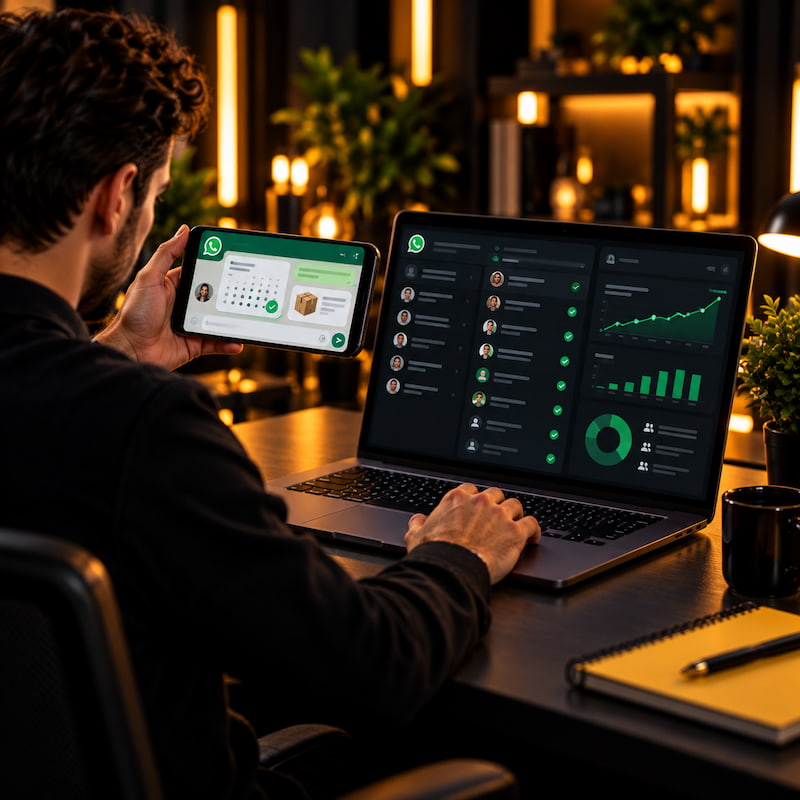
WHATSAPP MARKETING
Creators Specialist runs WhatsApp marketing campaigns for businesses in Lebanon and the GCC — promotions, launches, booking reminders and order updates sent to customers who asked to hear from you.
It is the channel people here actually read. That is the entire argument for it, and also the reason it is easy to ruin.
Email gets ignored and SMS gets deleted. WhatsApp gets opened, usually within minutes, because it is the app people already live in all day.
That attention is borrowed, not owned. The same thing that makes WhatsApp work — it is personal, it is where family and friends are — is what makes an unwanted message feel like an intrusion rather than an advert. A customer who ignores your email will block your number, and a number that gets blocked and reported enough times stops delivering to anyone.
So the discipline matters more than the creative. Send to people who opted in. Send something worth the interruption. Make leaving easy. Do that and WhatsApp outperforms every other direct channel we run; skip it and you burn a sender number and a customer list at the same time.
We run campaigns on the official WhatsApp Business Platform, not a personal phone with an automation tool bolted on. That is the difference between a channel you can build on and one that disappears the week it starts working.
Promotions and offers. Seasonal campaigns, new arrivals, and offers sent to the segment they actually apply to rather than the whole list at once.
Launches and events. A new branch, a new product, an event. The channel where an announcement is read the same hour it is sent.
Booking and appointment reminders. For clinics, salons and restaurants, where a reminder the day before is the difference between a full schedule and an empty slot.
Order and delivery updates. Confirmation, dispatch and delivery messages that cut the number of customers messaging you to ask where their order is.
Re-engagement. Reaching customers who bought once and have not come back, which is almost always cheaper than finding new ones.
Two-way conversations. Replies land in a shared inbox your team can answer from, so a campaign that starts a conversation does not die in someone’s personal WhatsApp.
In Lebanon and across the GCC, WhatsApp is not one channel among several — it is how people communicate by default. Customers message businesses on it before they call, and they read a WhatsApp message in minutes where an email sits unopened for days, if it arrives at all.
Arabic and English both work, including a mix of the two, and messages arrive on the phone the customer already has in their hand rather than depending on an app they would have to install.
This is the part most providers do not mention, and the reason most cheap WhatsApp blasting stops working within weeks.
We send only to people who opted in, through the official WhatsApp Business Platform, using message templates approved in advance. Every message includes a way to opt out, and we remove those people immediately. We do not buy lists, we do not scrape numbers, and we will not send to a list you cannot explain the origin of — not out of principle alone, but because it gets your number blocked and takes the channel down with it.
Done properly, a WhatsApp number is an asset that gets more valuable each month. Done the cheap way, it is a number you replace twice a year.
Restaurants and food chains, clinics and medical practices, beauty and salons, retail and e-commerce. Anywhere with repeat customers and something time-sensitive to tell them, which is where this channel pays for itself fastest.
Quoted per campaign. The number depends on how many contacts you are sending to, how many campaigns a month, whether replies need managing, and how much work the list needs before the first send.
Message delivery itself is charged by WhatsApp per conversation and varies by country and message type. We set that out clearly in the quote so you can see what is delivery cost and what is our work, rather than one number with no explanation behind it.
Can we send to a list of numbers we already have?
Only if those people agreed to hear from you. A list of customers who gave you their number to receive a delivery is not the same as a list that opted in to marketing. We will go through your list with you and say honestly what is safe to send to.
Will our number get banned?
Not if it is run properly. Bans come from sending to people who did not opt in, from being reported and blocked repeatedly, and from using unofficial tools. Running on the official platform with approved templates and a real opt-out is what keeps the number alive.
Do we need a separate phone number?
Yes, a dedicated business number, not the one your staff use day to day. Once a number is registered to the business platform it cannot also be used as a normal WhatsApp account on a phone.
How is this different from broadcast lists on a normal WhatsApp?
A broadcast list only reaches people who saved your number, caps out at a few hundred, and gets your account restricted if you lean on it. The business platform has no such limit, reports on delivery and reads, and is the supported way to do this.
Can customers reply?
Yes, and they will. Replies go to a shared inbox your team answers from. A campaign that cannot be replied to wastes the one thing this channel is better at than any other.
How quickly can we start?
Usually one to two weeks. Most of that is business verification and template approval, both on WhatsApp’s side rather than ours. The list work happens in parallel.
WhatsApp works best as the follow-up to everything else — see Media Buying for bringing people in, and SEO & Google Business Profile for the ones who find you on their own.

Campaigns built, templates approved, the list cleaned and segmented, and a report after each send showing delivery, reads, replies and what it produced — against what the campaign cost.
An account manager who handles the setup, the template approvals and the sending schedule, so you are not learning a platform in order to run one campaign a month.

Business account verified, sender number registered and your display name approved, so messages arrive as your business rather than an unknown number.
We clean the list, remove dead numbers, and split it by what people actually bought or asked about, so each message fits who receives it.
We write the message and get the template approved before the send, because unapproved templates are the most common reason a campaign stalls on the day.
Scheduled, sent, and reported on: delivered, read, replied, opted out, and what it produced.
